Showing posts with label us constitution. Show all posts

Sunday, August 24, 2008

EURObama Chose Senate Foreign Relations Committee Chair 'Lightweight Joe' to Push 'Green' UN Treaties Like the UNCLOS & Kyoto Protocol

The United Nations Convention on the Law of the Sea (UNCLOS) may soon be debated, once again, on the floor of the U.S. Senate, most likely sometime during 2009. Although last October 2007, the Senate Foreign Relations Committee (SFRC), chaired by Democratic Senator Joseph Biden, had voted 17-4 to submit the UNCLOS to a floor vote for ratification, the SFRC failed to satisfy many Americans’ demands to convene full, impartial and transparent open public hearings.


See Ken Timmerman, Senate Refuses Debate on Controversial Treaty, Newsmax.com (Sept. 27, 2007) at: http://www.newsmax.com/timmerman/Sea_treaty/2007/09/26/36021.html . "Officially known as the United Nations Convention on the Law of the Sea, opponents are referring to it more simply as the Law of the Sea Treaty, or LOST. What’s got them most riled up is the fact that neither the Bush White House, nor the Treaty’s supporters in the United States Senate, appear willing to have a forthright, honest, and full debate. 'They’re trying to ram this thing through in the dead of night,' said former Reagan administration Pentagon official Frank Gaffney, who now heads the conservative Center for Security Policy. On Thursday, the Senate Foreign Relationship Committee, which is chaired by Sen. Joe Biden of Delaware, will hold its first hearing on the controversial Treaty. A bevy of senior Bush administration officials will all testify in favor of the Treaty. But not a single voice in opposition will be heard. 'Biden brushed us off with a form letter,' says Cliff Kincaid, an anti-United Nations activist who has teamed together with Gaffney and other conservatives into an ad hoc coalition to oppose the treaty. Thursday’s hearing 'is just a stunt by Biden to get mileage for his presidential campaign,' he told reporters in Washington on Wednesday. “And the Bush administration is being dragged along for the show.”


Indeed, what actually transpired following such 'pushback' were perfunctory UNCLOS ratification hearings, with administration officials and treaty proponents dominating much of the ‘air time’ and their obscurantist testimonies receiving the most minimal of cross-examinations. In addition, none of the other committees possessing oversight jurisdiction, either in the Senate or the House of Representatives, called for or conducted their own such investigations. See Colby Itkowitz, Senate Panel Approves Law of the Sea Treaty, CQ TODAY – FOREIGN POLICY (Oct. 31, 2007), ITSSD Journal on the UN Law of the Sea Convention at: http://itssdjournalunclos-lost.blogspot.com/2008/01/senate-panel-approves-law-of-sea-treaty.html . "'Do we join a treaty that establishes a framework to advance the rule of law on the oceans?” Chairman Joseph R. Biden, Jr., D-Del., asked. “Or do we remain on the outside, to the detriment of our national interests?' The Bush administration strongly supports Senate passage of the treaty. Biden said the president told him it was one of his foremost foreign policy priorities. The treaty also has the backing of the U.S. military, intelligence agencies and business and environmental groups."


Due to Americans' dissatisfaction with the SFRC's (and Senator Biden's) lackluster performance, the Senate Majority has since been unable to secure enough votes to ensure the treaty’s ratification. Consequently, the U.S. UNCLOS ratification process remains, at least for the time being, frozen in limbo.


Arguably, had the Congress undertaken a due diligence review befitting its constitutional obligation to provide all Americans with due process of law, it would have been able to discover the treaty’s numerous environmental regulatory, enforcement and revenue-raising provisions pursuant to which new imposts could adversely affect the general public. Given the sheer length of the UNCLOS (over 200 pages) and the multiple subject matters it covers, (and thus the resulting complexity), reasonable citizens are therefore left to wonder whether ‘wisdom’ is served at this time and place and by this Congress, without considering the true amount of work that would be required to thoroughly vet what is perhaps the largest environmental regulatory treaty in the world.


Senator and now Democratic Candidate for Vice President Joe Biden supports greater U.S. participation in United Nations multilateral environmental treaties that would impose legal obligations on the United States government to incorporate European Union-style rules (e.g., the PRECAUTIONARY PRINCIPLE) that are economically costly and nonscience-based, into federal legislation and administrative agency regulations to which ALL American businesses and consumers would be subject. As noted on the Biden for President/Vice President website (See Delware's Joe Biden, at: http://www.joebiden.com/home.php/issues/display/environmental_protection/)

"Joe Biden’s Plan For Passing On A Cleaner, Greener World To Our Children Focus on Climate Change" - "Joe Biden is continuing his strong environmental record by leading the effort to pass the most aggressive bill in the Senate to reverse global warming -- the Global Warming Pollution Reduction Act. The Act would limit greenhouse gas emissions and help avert the major problems warming of our planet could cause – such as altering growing seasons; redistributing natural resources; and lifting sea levels. Lead the World Forward - Global warming requires a global solution. Joe Biden believes the US must take a leadership role in international climate treaty negotiations, and make it a top priority. As chairman of the Senate Committee on Foreign Relations, he wrote a bipartisan resolution directing the President to return to international negotiations and reclaim a leadership role in the fight against global warming. If we don’t engage countries like China – which is building one new coal-fired power plant a week – we will not solve the global warming crisis."

-------------------------------------------------------------------------------------------------
http://www.wtopnews.com/?nid=213&sid=1465340


Choice of Biden as VP Candidate Praised Overseas


By Arthur Max


Associated Press


August 23, 2008


ACCRA, Ghana (AP) - From confronting Russia to dealing with climate change, Barak Obama's selection of Sen. Joe Biden as his vice presidential candidate Saturday was seen abroad as adding weight and depth to the foreign policy of a potential Obama administration.


European analysts said the crisis in the Caucasus provided an appropriate backdrop to Biden's nomination.


In Accra, experts attending a U.N. climate change convention said Obama was sending a strong signal of change on what many see as a foreign policy debacle by the outgoing Bush administration regarding the battle against global warming.


"Biden owes his selection to (Russian Prime Minister Vladimir) Putin," said French political analyst Dominique Moisi. "Russia's invasion of Georgia reinforced the American worry about international tensions." The choice of the foreign affairs veteran was intended to reassure the electorate concerned about Obama's lack of credentials, Moisi said.


In Britain, the North America editor for the British Broadcasting Corp., Justin Webb, said Biden was "Vladimir Putin's contribution to American politics - he is a necessary antidote to the Obama lack of worldly wisdom, which before Georgia was a bit academic to most Americans."


Webb said Republican presidential candidate John McCain had acquitted himself well during the Russian invasion of Georgia this month. McCain "took the 3 a.m. call. Obama needs a pal who can do the same," Webb wrote in his blog.


In Germany, a member of Chancellor Angela Merkel's center-right Christian Democrats, Eckart von Klaeden, said Biden was "an exceptionally good decision, which shows how Obama is trying to organize all elements of the Democratic party behind him."


Biden's nomination created a buzz at the U.N. conference in Accra, where delegates from 160 countries were working on a successor to the Kyoto Protocol, the 1997 treaty regulating carbon emissions renounced by President Bush shortly after taking office in 2000.


The choice of Biden "is a good signal for these talks," said Angela Anderson, director of the Global Warming Campaign for the PEW environmental group. "I'm thrilled."


Biden, chairman of the Senate Foreign Relations Committee, drafted climate change legislation as long as 20 years ago, and is an aggressive supporter of domestic and international efforts to rein in emissions of carbon and other greenhouse gases.


"The easiest and fastest way to demonstrate a change of foreign policy would be on climate change," said David Doniger, of the Natural Resources Defense Council.


Biden and the ranking Republican on the committee, Sen. Richard Lugar of Indiana, both have sent top congressional staff to the latest series of climate negotiations. The aides, James Greene and Mark Helmke, are to report on the talks to the committee at the end of the year and make recommendations for the next administration.


"This treaty is going to be so complex that the Senate could not give its advice and consent" without a thorough briefing, Helmke, Lugar's aide, said on the conference sidelines.


Helmke said the president-elect, whether Obama or McCain, may send a high-level representative to the next round of talks in December, which takes place in Poland just a few weeks after the U.S. election and seven weeks before the inauguration.


Greene, Biden's aide, declined to comment on the day of his boss's nomination.


But Helmke said it was possible that Biden could take a leading role in the negotiations next year, matching the task of former Vice President Al Gore in capping the Kyoto negotiations a decade ago.
___
AP correspondents Melissa Eddy in Berlin, Jamey Keaten in Paris and Raphael G. Satter in Paris contributed to this report.

-------------------------------------------------------------------------------------------------
EUROBAMA'S SOUND JUDGMENT & BOLSTERED INTERNATIONAL RELATIONS/FOREIGN POLICY CREDENTIALS...????

http://www.tnr.com/politics/story.html?id=e0b42753-0d7e-4be0-9b6b-d4a626e8d4e9


That's the Ticket! - Why loquacious Delaware Senator Joe Biden is a Terrific Vice-presidential Pick for Barack Obama


by Jonathan Cohn


The New Republic


Post Date Saturday, August 23, 2008


It's a great pick! He connects with blue-collar voters and reassures voters worried about Barack Obama's foreign policy inexperience.

It's a lousy pick! He's prone to gaffes and, as a senior member of the Senate, steps on the message of change.


In the next few days, pundits will be obsessing over the political impact of putting Joe Biden on the Democratic ticket. But the more important questions are the more tangible ones. Is Biden qualified to serve as an advisor to the president and, in an emergency, his stand-in?
What does this selection tells us about the way Obama makes decisions?

[THIS SHOWS HOW TRULY HYPOCRITICAL AND DEVOID OF GOOD JUDGMENT. BY RELYING ON 'LIGHTWEIGHT JOE' TO BOLSTER HIS OWN 'LIGHTWEIGHT' CREDENTIALS, EUROBAMA ONLY MAKES HIMSELF, AND POTENTIALLY THE UNITED STATES, MORE SUSCEPTIBLE TO NUANCED AND WELL-CONSIDERED & STRATEGIZED EURO-INFLUENCES, LET ALONE TO THE PLOTTINGS OF OTHER FOREIGN GOVERNMENTS. ALSO, WE CAN SEE EUROBAMA'S FLAWED JUDGMENT IN HIS RELIANCE ON HIGHLY QUESTIONABLE STATEMENTS PREVIOUSLY MADE BY SENATE MAJORITY LEADER HARRY REID.]


[EUROBAMA WAS RECENTLY QUOTED DURING THE SADDLEBACK CHURCH PUBLIC FORUM THAT TOOK PLACE IN LAKE FOREST, CALIFORNIA, AS CRITICIZING THE SELECTION OF CLARENCE THOMAS AS U.S. SUPREME COURT JUSTICE. WHEN ASKED WHICH SUPREME COURT JUSTICES HE WOULD NOT HAVE NOMINATED, EUROBAMA ANSWERED: "I WOULD NOT HAVE NOMINATED CLARENCE THOMAS. I DON'T THINK THAT HE...WAS A STRONG ENOUGH JURIST OR LEGAL THINKER AT THE TIME FOR THAT ELEVATION. SETTING ASIDE THE FACT THAT I PROFOUNDLY DISAGREE WITH HIS INTERPRETATION OF A LOT OF THE CONSTITUTION." See Jim Meyers, Obama: Clarence Thomas Unfit for Supreme Court, Jacksonville Forum (Aug. 18, 2008) at: http://www.topix.com/forum/city/jacksonville-fl/TI5L03OUTI8GR968U . ]


[HOWEVER, ACCORDING TO JUSTICE THOMAS' FORMER LAW CLERK WENDY E. LONG, CURRENTLY COUNSEL TO THE JUDICIAL CONFIRMATION NETWORK, "OBAMA STARTED TO SAY THAT JUSTICE THOMAS DIDN'T HAVE ENOUGH 'EXPERIENCE' FOR THE SUPREME COURT. IN MID-SENTENCE, WHEN OBAMA REALIZED THAT HE HIMSELF HAS FAR LESS EXPERIENCE FOR THE PRESIDENCY THAN JUSTICE THOMAS HAD FOR THE COURT IN 1991, HE SHIFTED AND SAID JUSTICE THOMAS 'WAS NOT A STRONG ENOUGH JURIST OR LEGAL THINKER AT THE TIME"...THIS IS ALL REMINISCENT OF (SENATE MAJORITY LEADER) HARRY REID'S COMMENT SEVERAL YEARS AGO THAT JUSTICE THOMAS WAS 'AN EMBARRASSMENT TO THE COURT' AND THIS HIS OPINIONS 'WERE POORLY WRITTEN'. REID WAS EXPOSED AS THE IGNORAMUS THEN, AND THE CONGRESSIONAL BLACK CAUCUS ASKED HIM TO STOP USING 'STEREOTYPES AND CARICATURES'"...REID IS AMONG SEVERAL CRITICS WHO HAVE CALLED THOMAS' WRITTEN OPINIONS 'LIGHTWEIGHT' AND SUGGESTED THAT HE WANTS TO ABANDON THE PRINCIPLE OF 'STARE DECISIS' - STANDING BY PRECEDENT - AND REINVENT THE WHEEL WITH EVERY CASE." “'REASONABLE SUPREME COURT OBSERVERS OF ALL POLITICAL STRIPES, WHO DO NOT NECESSARILY AGREE WITH JUSTICE THOMAS' JURISPRUDENCE, CONSIDER HIS WORK TO BE SCHOLARLY AND OF TOP QUALITY. AND YET SENATOR OBAMA IS, SADLY, UNABLE TO ACKNOWLEDGE EVEN THAT MUCH ABOUT AN INTELLIGENT, WONDERFUL AND KIND MAND WHO BROKE RACIAL BARRIERS TO RISE TO THE VERY TOP OF THE LEGAL PROFESSION', SAID HELGI WALKER, A FORMER ASSOCIATE COUNSEL TO PRESIDENT BUSH AND FORMER LAW CLER FOR THOMAS." See: Conservatives Slam Obama’s Answer About Supreme Court Justices at Saddleback Forum, FOXNews.com (Aug. 18, 2008) at: http://elections.foxnews.com/2008/08/18/conservatives-slam-obamas-answer-about-supreme-court-justices-at-saddleback-forum/ ].


[DESPITE ALL OF THIS, EUROBAMA NOMINATES U.S. DELAWARE SENATOR JOE BIDEN AS HIS VICE PRESIDENT, WHOM BOTH DEMOCRATS AND REPUBLICANS HAVE LONG REFERRED TO AS AN 'INTELLECTUAL LIGHTWEIGHT'. EVEN THE TRANSATLANTIC BLOGOSPHERE IS WELL ACQUAINTED WITH 'LIGHTWEIGHT JOE'S' FALLIBILITIES: "HE'S THE SORT OF MAN I'VE MET MANY A TIE IN IRISH PUBS. BIDEN WIL TELL YOU, AT SOME LENGTH FOR SURE, ALL ABOUT HIS PLANS FOR THE FUTURE, HOW HE'S ON THE CUSP OF GREATNESS JUST WAITING FOR THAT LAST PIECE TO FALL NEATLY INTO PLACE. THE FACT THAT - STUBBORNLY - IT HAS NEVER YET DONE SO DETERS HIM NOT A BIT...YOU CAN PICTURE HIM PROPPING UP ONE END OF THE BAR FOR THIRTY YEARS; LONG ENOUGH FOR ALL TO BE FORGIVEN, ALL ANCIENT BATTLES AND BLUNDERS FORGOTTEN AS WE GROW OLDER, MORE CHARITABLE, MORE SENTIMENTAL. BIDEN'S THE SORT OF FELLOW WHO'LL MAKE A WILDLY INAPPROPRIATE AND SUGGESTIVE COMMENT ABOUT YOUR WIFE. TO YOUR FACE. ON YOUR WEDDING DAY. BUT HE'LL DO SO IN SUCH A GUILELESS FASHION FREE FROM ANY HINT OF MALICE THAT, DASH IT AND ALMOST HALF DESPITE YOURSELF, YOU FORGIVE THE SILLY OLD FOOL. HE WAS, YOU REALIZE, PROBABLY TRYING TO AY SOMETHING COMPLEMENTARY. HECK, EVEN HIS 1988 DISGRACE WAS SO PREPOSTEROUS - PLAGIARISING NEIL BLEEDIN' KINNOCK! - THAT IT SEEMS UTTERLY ARTLESS. SO BIZARRE THERE HAD TO BE AN INNOCENT, BRAIN-FRYING EXPLANATING FOR IT. DESPITE ALL THOSE YEARS IN WASHINGTON, THERE'S AN ENDEARING CHILD-LIKE QUALITY TO BIDEN. OR, TO PUT IT ANOTHER WAY, OBSERVING BIDEN IN FULL FLOW IS A GLORIOUS SIGHT; IT'S LIKE WATCHING A LABRADOR BOUND AFTER A BOUNCING BALL EVEN THOUGH, BEING A PUPPY, IT DOESN'T QUITE HAVE THE CO-ORDINATION TO GRAB THE BALL CLEANLY. INSTEAD THERE'S A FRENZY OF YELPING DELIGHT AS THE AS THE BALL CARROMS AROUND THE YARD, ALWAYS TANTALISINGLY JUST OUT OF REACH..." See Megan McArdle, A Man You Don't Meet Every Day, The Atlantic.com (Aug. 24, 2008) at: http://meganmcardle.theatlantic.com/archives/2008/08/a_man_you_dont_meet_every_day.php ].


The answer to the first question is unambiguously "yes." Start with the resume: Biden first came to the Senate in 1973, after a brief career in local government. He rose through ranks, eventually becoming chairman of the judiciary committee, a position he occupied from 1987 through 1995. In 1997, he became ranking minority member of the Senate Foreign Relations a Committee, which he chairs today. As a result of this experience, Biden can boast of real policy expertise--and genuine accomplishments. [??] Chief among them are the Violence Against Women's Act, which he sponsored and eventually shepherded to passage as part of the 1994 crime bill, and American intervention in the Balkans, for which he was an early and influential advocate.

Biden's history of public service has its blemishes, too. After masterminding the defeat of Supreme Court nominee Robert Bork in 1987, he famously botched the hearings for Clarence Thomas, presiding over a spectacle that somehow managed both to confirm a deeply conservative judge while making himself, and many liberals, seem insensitive to the concerns of women. Biden also voted for the Iraq War. He did so more reluctantly than some other Democrats, openly decrying President Bush's doctrine of preemption and promoting (with Republican Senator Richard Lugar) a measure that would have authorized war only to eliminate weapons of mass destruction. But when that effort failed, Biden voted for the final, broader resolution--thereby breaking with more prescient colleagues like Carl Levin and Jack Reed, who thought Bush hadn't made the case for war. Most recently, Biden supported the strongly anti-consumer 2005 bankruptcy law, although that was presumably a typical act of local political boosterism. (Delaware is home to the credit card industry.)

For many Washington insiders, it's Biden's words--not his votes--that deserve scrutiny. His promising 1988 presidential bid ended quickly following revelations he'd used quotes from other famous politicians, without attribution, and that he had a habit of exaggerating his past exploits. [!!] And while those transgressions are old news, might a general election campaign bring forth new ones? It's a legitimate worry. The Obama campaign doesn't need those sorts of distractions--not now and not for the next four years, should the Democrats win in November.


And yet as politically unfortunate as those instances have been, the more important question is what they reveal about Biden's character and leadership qualities. I have no special reporting insights here, but the consensus that emerges from past writings about him--including the descriptions in Battle for Justice, Ethan Bronner's account of the Bork hearings--is that Biden suffered from an acute case of intellectual insecurity. The boasts, in this view, reflected Biden's constant fear that he would be perceived as a lightweight, either because of his (then) youth or lack of top intellectual credentials. (He graduated from the University of Delaware and, later, Syracuse Law School.) Biden is older now. Washington considers him, legitimately, an elder statesman. One can imagine--or at least hope--that the insecurity has waned over time.


And even if it hasn't, it's important to put this character flaw in context. Biden may have stretched the truth about his own accomplishments, but that's a far lesser sin--at least in my book--than calculating every move based on political expediency or using high office to gain personal wealth. And there's no sign that Biden has ever been prone to these sorts of problems. On the contrary, his political history suggests real courage on behalf of important, but controversial, causes. Biden had to fight for both VAWA and the Balkans intervention. As for using office to get rich, Biden's record looks to be squeaky clean. Based on public disclosure forms, he is the least wealthy member of the U.S. Senate. It's a reflection of his working-class roots--and the everyman sensibility that remains one of his most endearing characteristics. But it's also a tribute to Biden's virtue. Such a long tenure in office, surely, has presented ample opportunities for graft and shady dealings.


So Biden is not just qualified for the job. He is very qualified for the job. He can help Obama govern; should the unthinkable happen, he would make a capable and trustworthy commander-in-chief himself. But what does this tell us about Obama and how he makes decisions?


Political considerations surely played a major role in Obama's thinking. If you believe what you read, he had higher regard for--and a closer relationship with--several other contenders, including Virginia Governor Tim Kaine, Kansas Governor Kathleen Sebelius, and Rhode Island Senator Jack Reed. But voters might have rejected a ticket with Kaine or Sebelius, concluding it lacked sufficient experience in national and international politics. Reed, an Army veteran and highly respected lawmaker, didn't have that problem. But he's notoriously dull.


But it's unlikely politics were Obama primary motivation. If they had been, Obama might well have selected Evan Bayh, whose presence on the ticket would have put Indiana into play and--as a result--reshaped the electoral map. (Among other things, it would have drained McCain's financing, by forcing him to advertise in the expensive Chicago television market.) But Bayh, although a perfectly respectable senator, is not exactly a heavyweight. He claims no policy area as expertise; he has no major law or initiative that he can claim as an accomplishment. There's nothing terribly wrong with Bayh but there's nothing terribly right with him, either. It's been said that Bayh was the "safe" candidate--and, as a political matter, that's true. But given his less than sterling record, putting him a heartbeat away from the presidency would have actually been a little risky.


Biden's choice presents real risks for Obama, too--and not just political. Biden can be difficult. He speaks his mind, even when he has nothing nice to say. But if that sometimes makes conversations uncomfortable, it also makes them valuable. Obama has always said he didn't want a "yes" man--that he wanted a vice president who would challenge him intellectually and promote a vigorous debate about policy decisions. It's precisely the sort of environment that the current White House lacks. By choosing Biden, Obama tells us he's serious about that change.


One other, perhaps less appreciated, virtue of the Biden choice is what it says about Obama philosophically. Biden can be counted upon to play the role of house dissenter and skeptic. But he does so as somebody whose fealty to the basic values of the Democratic Party is not in doubt. On a wide range of issues, from economics to the courts to national security, Biden has compiled a record that would please the majority of progressives. His rating from Americans for Democratic Action is a perfect 100, just like Obama's. He scores well among other liberal groups, too.


Conservatives will blast this record, just as surely as liberals will (or should) celebrate it. But one of the virtues of having Biden as the vice presidential nominee is that he won't take those kinds of attacks lightly. He'll fight back. He'll remind people, rightly, that being a liberal Democrat means raising the minimum wage, making sure everybody has affordable health care, providing strong public schools, and protecting human rights. Then, he'll ask why conservative Republicans don't want the same things. That's exactly the kind of political debate this country needs. By picking Biden as a running mate, Obama has signaled that he welcomes this argument--and intends, finally, to win it.


Jonathan Cohn is a senior editor at The New Republic and the author of Sick: The Untold Story of America's Health Care Crisis--And the People Who Paid the Price.

-------------------------------------------------------------------------------------------------
http://query.nytimes.com/gst/fullpage.html?res=940DE5D61139F930A25752C0A96E948260

Biden Gives Kinnock Copy of His Speeches


REUTERS


Published: January 13, 1988


LEAD: Senator Joseph R. Biden Jr., meeting Neil Kinnock for the first time, today presented the Labor Party leader with a bound copy of the Senator's speeches and told reporters: ''I told him he was welcome to use them whenever he liked, with or without attribution.''


[NOW, IS THIS AN EXAMPLE OF THE GOOD JUDGMENT AND INTELLECTUAL HEFT & HONESTY TO WHICH THE NEW EUROBAMA PRESIDENTIAL TICKET ASPIRES?]


[DID NOT 'LIGHTWEIGHT JOE' UNDERSTAND HOW HE WOULD BE PERCEIVED BY NEIL KINNOCK, LET ALONE BY THE PRESS AND THE PUBLIC, AFTER HE PRESENTED THE UK LABOR PARTY LEADER WITH A COPY OF HIS SPEECHES CONTAINING THE PLAGIARIZED PASSAGES???]

[BUT THEN, AGAIN, WASN'T EUROBAMA HIMSELF ACCUSED OF PLAGIARISM?? See Alex Spillius, Hillary Clinton Accuses Obama of Plagiarism, UK Telegraph (Feb. 26, 2008) at: http://www.telegraph.co.uk/news/worldnews/1579074/Hillary-Clinton-accuses-Obama-of-plagiarism.html . "[Obama]...has been forced into the unwelcome distraction of fighting off charges from Mrs Clinton's camp that he lacks credibility after he used a short passage from a speech by his friend Deval Patrick, the Governor of Massachusetts, nearly verbatim and without attribution. Howard Wolfson, Mrs Clinton's chief spokesman, said: "Senator Obama's campaign is largely premised on the strength of his rhetoric and his promises, because he doesn't have a long record in public life. When the origin of his oratory is called into question, it raises questions about his overall candidacy." See also, Clinton Camp Accuses Obama Of Plagiarism, US News & World Reports Political Bulletin (Feb. 19, 2008) at: http://www.usnews.com/usnews/politics/bulletin/bulletin_080219.htm . "The Financial Times reports, 'In an attack designed to remind people of Joe Biden's withdrawal from the 1988 presidential campaign after his uncredited use of passages from Neil Kinnock, leader of the Labour party opposition in the UK, the Clinton campaign said it raised 'fundamental questions' about the integrity of Mr Obama's campaign.' The Los Angeles Times reports that Clinton, 'in response to a question from reporters on her campaign plane, added her voice to her staff's criticism of Obama. 'If your whole candidacy is about words, they should be your own words,' she said. 'That's what I think.'"].

[See Edward Luce, Clinton in a War Over Words With Obama, Financial Times (Feb. 18, 2008) at: http://www.ft.com/cms/s/0/e7744382-de4e-11dc-9de3-0000779fd2ac.html . "On Monday the Obama camp admitted that Mr Obama had used the same language as Mr Patrick in a speech in Wisconsin on Saturday in a passage designed to rebut the allegation that his campaign consisted of poetic phrases but little else. They said Mr Patrick and Mr Obama were friends who often “riffed off each other’s speeches”. 'Don’t tell me words don’t matter,' Mr Obama said in the passage borrowed from Mr Patrick. 'I have a dream – just words? We hold these truths to be self-evident – just words? We have nothing to fear but fear itself – just words?'”].


Mr. Biden dropped out of the Democratic Presidential race last September after admitting that he had used speeches by Mr. Kinnock and other politicians without attribution, and after published reports that he had plagiarized while in law school.


The Delaware Democrat, who met Mr. Kinnock at the House of Commons, said the Welsh politician ''did not give me any more ideas for speeches, nor I him.''


Mr. Biden, a member of the Senate Foreign Relations Committee, was on a two-day visit of Britain as part of a tour to consult allies on the treaty between the United States and the Soviet Union banning intermediate-range nuclear missiles.

-------------------------------------------------------------------------------------------------

http://bigheaddc.com/2008/02/18/katrina-vanden-heuvel-plagiarism-not-an-issue/

Katrina vanden Heuvel: Plagiarism Not An Issue

Bighead DC

Feb. 18, 2008

Katrina vanden Heuvel, the editor of The Nation magazine, told Chris Matthews today on Hardball that Sen. Barack Obama’s plagiarism scandal should not have been covered on the program because, she feels, it doesn’t matter to the common person. An incredulous Matthews responded that she should ask Sen. Joe Biden whether these kind of issues matter — a reference to Biden being forced to quit his bid for the presidency in 1987 after he plagiarised a speech. Pat Buchanan, a guest on the show, said that he felt this was a “bad day” for Obama, and that his character will likely be called into question more often now in the campaign.

See also Hardball: Plagiarism or Not?, Hardball at: http://www.youtube.com/watch?v=gAMhjDbrtyg

[WHAT KIND OF EXAMPLE DOES THIS PROVIDE FOR DEVELOPING COUNTRY GOVERNMENTS AND INDUSTRIES THAT SYSTEMATICALLY STEAL U.S. COPYRIGHTS, PATENTS and TRADESECRETS??? THESE POLITICIANS AND COMMENTATORS SHOULD BE ASHAMED OF THEMSELVES, ESPECIALLY UNINFORMED AND ARROGANT KATRINA VANDEN HEUVEL. DEAR MS. VANDEN HEUVEL, PLAGIARISM, LIKE COPYRIGHT and PATENT INFRINGEMENT, ARE REAL ISSUES THAT MATTER TO COMMON PEOPLE WHO OWN BUSINESSES, and INTELLECTUAL PROPERTY ASSETS!! See: ITSSD Journal on Intellectual Property Rights, at: http://itssdinternationaliprights.blogspot.com/ ].

Saturday, May 10, 2008

If The US Senate is in NO Rush to Ratify UNCLOS, Then Why Doesn't Congress Accord Americans 'Due Process' & Hold Open, Public UNCLOS Hearings?

http://www.abajournal.com/magazine/stuck_in_port


Stuck in Port - The U.S. Senate is in no rush to vote on ratification of the Law of the Sea Convention


By James Podgers


ABA Journal


February 2008


After a quarter-century of frustration, advocates for U.S. ratification of the U.N. Convention on the Law of the Sea are hoping their ship is finally about to come in.


It’s not there yet, however, and proponents are wary of experiencing déjà vu all over again.


The Senate Foreign Rela­tions Committee caused an initial wave of excitement when it voted 17-4 in late October to report the convention to the full Senate. Since then, the matter has stalled. There is just enough opposition to doubt whether the necessary two-thirds Senate majority (67 votes) can be mustered for ratification. The scenario is similar to 2004, when the Foreign Relations Committee favorably reported the convention, but it was not brought to a vote.


WIDESPREAD SUPPORT


Supporters of the convention say there is now momentum for ratification that wasn’t there before.


“It will go through; we will win it, but it’s a tough fight,” says John Nor­ton Moore, director of the Center for Oceans Law and Policy at the Uni­versity of Virginia School of Law in Charlottesville. He serves as a counselor to the ABA Standing Commit­tee on Law and National Security.


The treaty has a growing list of advocates. Those supporters include the U.S. Joint Chiefs of Staff, the Coast Guard, the State Depart­ment, the shipping and fishing industries, the petroleum industry and many environmental groups.


The treaty also has widespread bipartisan support in the Senate—six of the 10 Republicans on the For­eign Relations Committee joined their Democratic colleagues in voting to report it to the full Senate.


And in May, President Bush issued his first public call for ratification.


Joining the 154 nations (and Euro­pean Union) that have become parties to the treaty since it was final­ized in 1982 “will serve the national security interests of the United States, including the maritime mobility of our armed forces nationwide,” said Bush. “It will secure U.S. sovereign rights over extensive marine areas, including the valuable national resources they contain.”


[THE FACT THAT 154 NATIONS HAVE RATIFIED THE CONVENTION DOESN'T MEAN MUCH IF THE RULE OF LAW DOES NOT PREVAIL IN MOST OF THEM.]


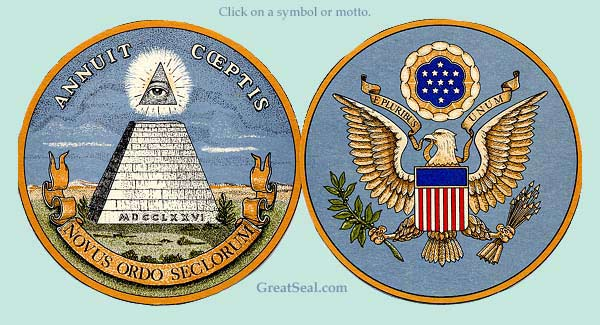
[THE AMERICAN PEOPLE ALREADY UNDERSTAND THAT THE UNITED STATES CONSTITUTION & ITS ACCOMPANYING BILL OF RIGHTS ARE UNIQUE INSTRUMENTS THAT HAVE ENDURED THE TEST OF TIME. THERE IS NO OLDER FUNCTIONING CONSTITUTION IN THE WORLD TODAY. NO OTHER COUNTRY, EVEN IN THE WEST, HAS SUCH A DOCUMENT, DEVELOPED DURING THE UNIQUE ENLIGHTENMENT PERIOD SPANNING THE 17-18TH CENTURIES. THE U.S. CONSTITUTION ESTABLISHED THE BASIS FOR A TRI-CAMERAL SYSTEM OF CHECKS AND BALANCES ('SEPARATION OF POWERS') THAT ALSO ENTAILS FEDERAL-STATE BALANCING AS WELL - FEDERALISM - ALL TO PROVIDE 'GOVERNMENT OF THE PEOPLE, BY THE PEOPLE AND FOR THE PEOPLE'. THIS WAS CLEARLY REFLECTED IN THE CONSTITUTION'S ACCOMPANYING BILL OF RIGHTS WHICH RECOGNIZED & PROTECTED 'NATURAL RIGHTS', INCLUDING THE RIGHT TO THE PROTECTION OF EXCLUSIVE PRIVATE PROPERTY, WHICH THE DECLARATION OF INDEPENDENCE ALSO WAS INTENDED TO ACHIEVE - TO ENABLE AMERICAN CITIZENS TO REALIZE LIFE, LIBERTY & THE PURSUIT OF HAPPINESS. THE U.S. REPRESENTATIVE FORM OF DEMOCRACY REMAINS UNIQUE IN THE WORLD AND IS ACTUALIZED THROUGH THE BILL OF RIGHTS, WHICH RECOGNIZES THE INDIVIDUAL UNIT OF SOCIETY(THE 'INDIVIDUAL GOOD') AS SANCROSANT. AN IMPORTANT RECOGNITION OF THE CONTRIBUTION OF INDIVIDUALS TO AMERICAN SOCIETY IS ALSO REFLECTED ON THE OBVERSE SIDE OF THE GREAT SEAL OF THE UNITED STATES, WITH THE WORDS 'E. PLURIBUS UNUM' - OUT OF MANY, ONE. THE REVERSE SIDE BEARING THE WORDS 'NOVUS ORDO SECLORUM' DOES NOT MEAN, AS CLAIMED BY THE GLOBALISTS, 'A NEW WORLD ORDER'. IT MEANS, INSTEAD 'A NEW ORDER OF THE AGES', WHICH INTIMATES THE PRIMACY OF INDIVIDUAL GOOD OVER SOCIETAL GOOD, AS DETERMINED BY THE PEOPLE THROUGH THEIR REPRESENTATIVES, RATHER THAN BY GOVERMENT OR THE RULER - RULE of LAW, NOT RULE by MEN, WHETHER THEY BE GOVERNMENT OFFICERS OR ACADEMIC EXPERTS. (See, e.g., Origin and Meaning of the Mottoes on the Great Seal, Myth and Misinformation about the Great Seal's at: http://www.greatseal.com/mythamerica/index.html; http://www.greatseal.com/mottoes/seclorumvirgil.html
("The motto Novus Ordo Seclorum was coined by Charles Thomson in June 1782. He adapted it from a line in Virgil's Eclogue IV, a pastoral poem that expresses the longing for a new era of peace and happiness which was written by the famed Roman writer in the first century B.C.")).]


[SCHOLARS HAVE REFERRED TO THIS NOTION AS 'METHODOLOGICAL INDIVIDUALISM'. See: Svetozar (Steve) Pejovich, Private Property – A Prerequisite for Classical Capitalism, Prepared for the Conference on The Roots of Capitalism, (Oct. 16-18, 2005) at p. 3, at: http://www.easibulgaria.org/docs/Pejovic.doc . "The cornerstones of the private-property, free-market economy are classical liberalism and methodological individualism. Classical liberalism is about individual liberty, openness to new ideas, and tolerance of all views. Methodological individualism means that the unit of analysis is the individual. Governments, think tanks, universities and other organizations do not make decisions; only individuals can.Individuals conceive ideas, invest time and effort in formulating them, and persuade others to accept them. Professor Alan Macfarlan has traced the origin of individualism in the West to 13th century England. He defined it as “the view that society is constituted of autonomous, equal units, namely separate individuals and that such individuals are more important, ultimately, than any larger constituent group. It is reflected in the concept of individual property, in the political and legal liberty of the individual, in the idea of the individual’s direct communication with God.")]


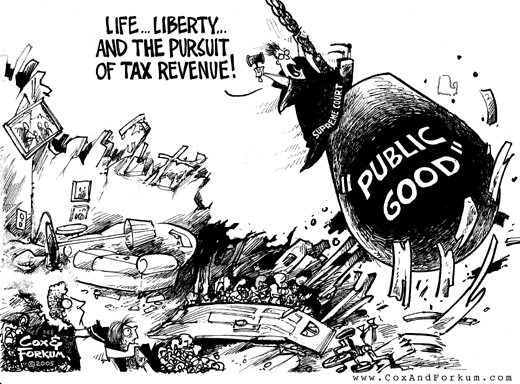
AS A GENERAL RULE, THEN, (EXCEPT IN INSTANCES WHERE THE COURTS, LEGISLATING FROM THE BENCH, HAVE ENGAGED IN SOCIAL ENGINEERING TO ATTENUATE PRIVATE PROPERTY RIGHTS FOR THE PERCEIVED 'PUBLIC GOOD', THROUGH USE OF EMINENT DOMAIN OR REGULATORY 'TAKINGS'), RESPECT FOR EXCLUSIVE PRIVATE PROPERTY & OTHER INDIVIDUAL RIGHTS SERVES AS A MAJOR POINT OF DEPARTURE FROM OTHER NATIONS. IN MANY NATIONS THROUGHOUT THE WORLD, THE POLITY (THE 'PUBLIC GOOD'), NOT THE INDIVIDUAL, IS RECOGNIZED AS THE MOST IMPORTANT UNIT IN SOCIETY, INCLUDING IN WESTERN EUROPE. IN OTHER WORDS, IN AMERICA, IT IS UNIVERSALLY UNDERSTOOD THAT 'THE PEOPLE' IMBUE GOVERNMENT WITH LEGITIMACY - SINCE THE U.S. CONSTITUTION PRECEDED THE FORMATION OF GOVERNMENT, GOVERNMENT CANNOT REMAIN IN POWER WITHOUT THE APPROVAL/'LICENSE TO OPERATE' OF THE AMERICAN PEOPLE. RULE OF LAW IS THE NORM, NOT RULE BY LAW - RULE OF MEN. SINCE IN EUROPE, GOVERNMENT (THE 'STATE') PRECEDED THE DRAFTING OF CONSTITUTIONS, THE PEOPLES' RIGHTS ARE SUBJECT TO GOVERNMENT OVERRIDE - i.e. THEY ARE ATTENUATED. JUST AS EASILY AS GOVERNMENT GRANTS PEOPLE THEIR RIGHTS, THEY CAN TAKETH THEM AWAY.]


[TRANS-ATLANTIC DIFFERENCES IN THE RESPECT FOR & RECOGNITION OF THE INDIVIDUAL AND EXCLUSIVE PRIVATE PROPERTY RIGHTS HAS BEEN CHARACTERIZED BY ONE SCHOLAR AS SYMPTOMATIC OF THE LONG-STANDING DIFFERENCES BETWEEN 'ANGLO-AMERICAN CAPITALISM' & 'CONTINENTAL CAPITALISM' THAT HAVE LONG BEEN HIDDEN BY THE PREVIOUS 'COLD WAR'. HE ALSO BELIEVES THAT MOST GLOBALISTS, ON BOTH SIDES OF THE ATLANTIC, WISH TO IGNORE THEM. HIS RESEARCH REVEALS THAT THERE ARE SIGNIFICANT DISTINCTIONS BETWEEN ANGLO-AMERICAN & CONTINENTAL CAPITALISM THAT MUST BE UNDERSTOOD BEFORE GLOBAL HARMONIZATION CAN TAKE PLACE:]


["German law protects property rights only to the extent that they serve 'human dignity' and the German welfare state. Property rights in Italy are also attenuated; the Italian Constitution allows protection of private property insofar as it serves a social function. Thus, property rights in Germany and Italy neither protect the subjective preferences of their owners nor block legislative and regulatory redistributive measures. The attenuation of private property rights enables the government to interfere with the right of individuals to seek the best use for the goods they own...The contrast between their version of capitalism (hereafter: continental capitalism) and Anglo-American capitalism is striking. Reflecting its skepticism about rulers’ foresight and goodwill, classical capitalism considers any outcome to be fair and just as long as it emerges from the process of voluntary interactions under the umbrella of negative rights. In contrast, continental capitalism believes in rulers’ foresight and goodwill. It means that continental capitalism does not view the government as a predator requiring the rule of law to tame it. On the contrary, it wants the government to be an active factor in running the economy.

Continental capitalism is then more concerned with the desired outcome of economic activities than with the process of voluntary interactions leading to unanticipated results. Terms such as public interest, social justice and other grand-sounding names are used to justify the desired outcome of economic activities. Whatever term is used to explicate the desired outcome, it is a façade hiding subjective preferences of the political-scientific elite."


See: Svetozar (Steve) Pejovich, Private Property – A Prerequisite for Classical Capitalism”, Prepared for the Conference on The Roots of Capitalism, (Oct. 16-18, 2005) at p. 3, at: http://www.easibulgaria.org/docs/Pejovic.doc ; Svetozar (Steve) Pejovich, Capitalism and the Rule of Law: The Case for Common Law, Prepared for discussion at Workshop in Philosophy, Politics and Economics at George Mason University (Oct. 9, 2007) at pp. 4-5, at: http://economics.gmu.edu/pboettke/Boettke/workshop/fall07/Pejovich.pdf .]


[IF UNCLOS REFLECTS A GLOBAL EFFORT TO HARMONIZE ENVIRONMENTAL LAWS SO THEY REFLECT A GRAND COMPROMISE THAT ALL NATIONS CAN LIVE WITH, THE U.S. IS LIKELY TO LOSE OUT. THIS WILL INEVITABLY INVOLVE A LOSS OF INDIVIDUAL RIGHTS GUARANTEED BY THE U.S. CONSTITUTION & BILL OF RIGHTS, NAMELY PROPERTY RIGHTS, DUE PROCESS RIGHTS & AMERICAN INDIVIDUALISM. THIS IS EVIDENTLY CLEAR GIVEN THE UNCLOS' EMPHASIS OF THE 'COMMON HERITAGE OF MANKIND' DOCTRINE THAT REFLECTS THE EUROPEAN SOCIAL MODEL OF COMMUNALISM. CONGRESS SHOULD HOLD OPEN, PUBLIC & TRANSPARENT HEARINGS TO INVESTIGATE AND EXPLAIN THE TREATY'S ENVIRONMENTAL PROVISIONS & THEIR IMPACT ON PRIVATE PROPERTY RIGHTS SHOULD THE U.S. RATIFY IT. BY DOING SO, THE AMERICAN PEOPLE WOULD BE PROVIDED WITH THE OPPORTUNITY TO DECIDE FOR THEMSELVES & THEN COMMUNICATE THAT DECISION TO THEIR ELECTED REPRESENTATIVES.]


Ratifying the treaty also will promote environmental interests and “will give the United States a seat at the table when the rights that are vital to our interests are debated and interpreted,” said the president.


The ABA has supported U.S. accession to the Law of the Sea Con­vention since 1994, when it went into effect after the 60th U.N. member state ratified it. The convention creates a structure to allow mem­­ber states to address issues relating to navigation, territorial and resource rights, and environmental protection on the seas that cover some two-­thirds of the world’s surface.


“It is difficult to conceive of any reason why the United States should not be a party to, and take a leading role in, advancing the rule of law as it applies to the seas,” said ABA President William H. Neukom of Seattle in a written statement (PDF) submitted to the Senate Foreign Rela­tions Committee in September.


[THIS IS A GOOD QUESTION. BUT, IF THE U.S. CONSTITUTIONAL SYSTEM IS UNIQUE AMONG NATIONS, AND MOST OTHER NATIONS DO NOT ASPIRE TO RECOGNIZE AND PROTECT THE RIGHTS GUARANTEED BY THE U.S. CONSTITUTION &, BY EXTENSION, THE RULE OF LAW, EITHER ON LAND OR AT SEA, THEN WHO & HOW WILL THE U.S. LEAD? LEADING NATIONS AGAINST COMMUNISM AND THE FORMER SOVIET UNION WAS ONE THING, BUT LEADING NATIONS AGAINST TERRORISM HAS PROVEN TO BE ANOTHER. HOW THEN TO LEAD THEM IN A RISK-BASED SCIENCE, ECONOMIC COST-BENEFIT & RULE OF LAW-BASED MANNER? HOW LONG WILL IT TAKE? WHAT MUST THE U.S. GIVE UP IN TERMS OF SOVEREIGNTY? HOW MUCH OF OUR INDIVIDUALLY GUARANTEED CONSTITUTIONAL RIGHTS MUST WE SURRENDER IN THE PROCESS?


REMEMBER, THE AMERICAN PEOPLE MUST KNOW WHAT THEY ARE GETTING INTO WHEN A TREATY IS TO BE RATIFIED, JUST AS WHEN THEIR PROPERTY IS TO BE TAKEN AWAY.]


“It will serve our inter­ests for as long as we are bordered by two great oceans. Looking to the future, rat­ification would also do much to re-es­tablish our credibility as a nego­tia­ting partner and leader, as we have always been, in furthering the rule of law in the world.”


ARCTIC COMES INTO PLAY


And then there’s the arctic. the changing climate near the North Pole —widely interpreted to be a result of global warming—has raised specu­lation among scientists, energy companies and governments that the re­gion could be a feasible source of oil, gas and minerals.


Experts say the Law of the Sea Convention will be crucial to allocating rights to those resources, especial­ly among the nations that potentially could claim sovereignty over some regions of the Arctic: Russia, Canada, Norway, Denmark (which controls Greenland) and the United States. (A separate international agreement governs Antarctica.)


The convention provides a framework for discussing access to resources in the Arctic, says David D. Caron, a co-director of the Law of the Sea Institute at the University of California at Berkeley. But, he notes, “it becomes more complicated if we don’t participate. Our voice is diminished by not being part of the treaty, even though we’ll still be heard if we yell louder.”


[WELL, THERE IS CERTAINLY NO CONSENSUS ABOUT THIS - DIFFERENCES OF OPINION STILL ABOUND. See: How Can Americans Get Beyond Debate Over Causation If UNCLOS Would Subject U.S.Arctic Oil Fields & Tankers to the Precautionary Principle??, at: http://itssdjournalunclos-lost.blogspot.com/2008/05/can-americans-get-beyond-debate-over.html ; Former UN Legal Affairs Official Bent Out of Shape by 'Arctic Meltdown': Proclaims the Multilateral UNCLOS Norms & Regulations - PRECAUTION - Govern, at: http://itssdjournalunclos-lost.blogspot.com/2008/05/former-un-legal-affairs-official-bent.html .]


The irony is that the United States still stands outside the convention—it’s the last major industrial or maritime nation to put off ratification— after playing such a vital role in the six-year drafting process that began in 1974, says Moore.


“This is one of the clearest and strongest victories for the United States in the history of multilateral negotiations,” he says. “The United States did very well on the merits.”


[NEITHER FORMER PRESIDENT RONALD REAGAN, NOR HIS CHIEF UNCLOS NEGOTIATOR, JAMES MALONE, THOUGHT SO, & FOR GOOD REASON.]


NAUTICAL EXCLUSIVITY


Among the provisions that favor U.S. interests, say Moore and other convention proponents, is the rec­ognition of a 12-nautical-mile boundary of territorial waters for coastal nations as well as resource management rights within a 200-nautical-mile exclusive economic zone. (A nautical mile is equivalent to 1.15 statute miles.)


As a party to the convention, the United States would have the largest EEZ of any nation in the world, according to briefing materials prepared by the ABA Governmental Affairs Office.


[ AS FAR AS SOVEREIGN BOUNDARIES GO, THE UNCLOS GRANTS THE UNITED STATES NOTHING THAT IT DID NOT ALREADY HAVE SOVEREIGN CONTROL OVER - THE TERRITORIAL SEA, THE COASTAL SEA, THE CONTIGUOUS ZONE, THE EXCLUSIVE ECONOMIC ZONE, THE CONTINENTAL SHELF - WHICH THREE FORMER PRESIDENTS OF THE UNITED STATES UNILATERALLY DECLARED AS SOVEREIGN U.S. TERRITORY. THE UNCLOS MERELY CODIFIED IN A TREATY ALL NOTIONS OF SOVEREIGN OCEANS BORDERS THAT CUSTOMARY INTERNATIONAL LAW HAD HISTORICALLY RECOGNIZED. THUS, HISTORICAL PRECEDENT REFLECTS THAT U.S. SOVEREIGN BORDERS ARE SECURE. WHAT UNCLOS PROVIDES FOR THAT IS NEW HERE, IS THE EXTENSION OF THE CONTINENTAL SHELF. HOWEVER, IF HISTORICAL PRECEDENT IS RELIED ON, THE U.S. CAN UNILATERALLY DECLARE AN EXTENSION ONCE IT HAS ACCUMULATED IRONCLAD GEOLOGICAL EVIDENCE SUPPORTING ITS CLAIM. See: U.S. Can Declare Extension of Sovereign Boundaries Independent of the UNCLOS, Precedents Show, at: http://itssdjournalunclos-lost.blogspot.com/2008/05/us-can-declare-extension-of-sovereign.html .]


The convention also grants coastal nations sovereign rights over natural resources in the continental shelf extending from their shores and further grants rights to conduct deep seabed mining in designated areas of the ocean floor (although none is under way at this time).


[THE CONVENTION DOES CANNOT GRANT THE U.S. RIGHTS TO DO THAT WHICH IT ALREADY HAD THE RIGHT TO DO ACCORDING TO CUSTOMARY INTERNATIONAL LAW.]


A catch for the United States, how­ever, is that a member state must make its claim to continental shelf areas to a special commission within a decade after ratifying the convention. Because it hasn’t ratified the convention, the United States can’t file a claim with the commission, which will issue recommendations on which claims to the continental shelf should be recognized.


Those deadlines could be par­ticularly important because the Commission on the Limits of the Continental Shelf is likely to be the body that determines whether claims by various nations to devel­opment rights over regions of the Arctic have merit.


[IN OTHER WORDS, PROPONENTS OF THE UNCLOS ARE SATISFIED WITH PROVIDING A U.N. INTERGOVERNMENTAL INSTITUTION LACKING POLITICAL ACCOUNTABILITY WITH THE JURISDICTION TO DETERMINE U.S. SOVEREIGN BORDERS, SOMETHING THAT IS HISTORICALLY UNPRECEDENTED.]


When Russian scientists dropped a titanium version of their national flag on the ocean floor under the North Pole, the gesture was symbolic, Caron says. More significant, he says, is the claim Russia filed with the commission that the Lomonosov Ridge, which reaches deep into the Arctic, is an extension of its continental shelf. Meanwhile, Denmark has suggested that the ridge actually is connected to Greenland. Experts say any solution will likely involve direct talks between claimant nations.


From a national security standpoint, the Law of the Sea Conven­tion is important because it calls for coastal states to recognize the right of “innocent passage” through their waters by both naval vessels and commercial ships. It grants ship and aircraft passage through straits used for international navigation, many of them in strategically sensitive areas.


[UNFORTUNATELY, WHILE THE TREATY CALLS FOR 'INNOCENT PASSAGE', MANY COASTAL STATES, SUCH AS AUSTRALIA, CANADA AND THE MEMBER STATES OF THE EUROPEAN UNION DO NOT RECOGNIZE 'INNOCENT PASSAGE' IF THEY CAN DREAM UP AN ENVIRONMENTAL REASON NOT TO. IN OTHER WORDS, THE QUAINT NOTION OF 'INNOCENT PASSAGE' IS CIRCUMSCRIBED BY UNCLOS' 45+ ENVIRONMENTAL ARTICLES, ANNEXES, REGULATIONS & PROTOCOLS. See: UNCLOS Ratification Would Provide a 'Shield of U.S. Sovereignty' Against EU & Environmentalist-Inspired 'Lawfare'??, at: http://itssdjournalunclos-lost.blogspot.com/2008/05/unclos-ratification-would-provide.html .]


Taken together, these provisions represent “an astounding expansion of U.S. sovereignty,” says Moore.


Opponents of the convention don’t see it that way. Instead, they maintain that the convention would deprive the United States of sovereign rights. In particular, their concerns focus on the potential powers of three bodies created by the convention to consider disputes over the use of the oceans.


In addition to the Com­mission on the Limits of the Continental Shelf, the International Seabed Authority was created to oversee mining and other commercial activities on the ocean floor. The Inter­national Tribu­nal for the Law of the Sea was created to adjudicate disputes submitted to it that arise out of interpretation and application of treaty provisions.


A common complaint of convention opponents is that these bodies would amount to a “nautical U.N.” empowered to limit U.S. rights on and under the seas.


But convention supporters say those bodies do not in most cases have ultimate decision or enforcement powers, but rather were created to give nations a framework to seek resolutions to disputes. They note that the convention also provides for other dispute resolution mechanisms, including arbitration, which the U.S. government has indicated it favors.


[WHILE IT IS TRUE THAT THE UNCLOS PROVIDES FOR A MENU OF DISPUTE SETTLEMENT OPTIONS, INCLUDING RESORT TO THE INT'L TRIBUNAL ON THE LAW OF THE SEA (ITLOS), THE INT'L COURT OF JUSTICE (ICJ) & ARBITRATION, U.S. VICTORY IN THESE FORUMS IS NOT ASSURED, GIVEN THAT THE U.S. WOULD HAVE ONLY ONE SEAT ON ANY ONE OF THESE TRIBUNALS, AND THERE ARE MANY NATIONS WITH INTERESTS HOSTILE TO THE U.S. AS CONCERNS ENFORCEMENT POWERS, WHY SHOULD THE U.S. JOIN A TREATY IF IT DOES NOT INTEND TO FOLLOW ITS RULES??]


[IN THIS REGARD, READERS SHOULD CONSIDER HOW ONCE THE U.S. RATIFIES THE UNCLOS, IT IS BOUND TO, FOR ALL INTENSIVE PURPOSES: UNCLOS PARTIES, PURSUANT TO UNCLOS ARTICLES 186-187 and ANNEX VI, HAVE NO CHOICE BUT TO SUBMIT TO THE COMPULSORY JURISDICTION OF THE ITLOS SEABED DISPUTES CHAMBER FOR ANY DISPUTE ARISING BETWEEN THEM IN THE 'AREA', WHICH IS UNIQUE AMONG INTERNATIONAL ENVIRONMENTAL AGREEMENTS, BECAUSE ONLY UNDER THE UNCLOS & ITS MIGRATORY FISH STOCKS PROTOCOL, IS DISPUTE SETTLEMENT COMPULSORY and BINDING. UNCLOS PARTIES ARE ALSO EXPRESSLY REQUIRED BY ARTICLE 39 OF ANNEX VI OF THE UNCLOS TO ENSURE THAT THEIR DOMESTIC COURTS ENFORCE THE DECISIONS OF THE SEABED DISPUTES CHAMBER "IN THE SAME MANNER AS JUDGMENTS OR ORDERS OF THE HIGHEST COURT OF THE STATE PARTY IN WHOSE TERRITORY THE INFRINGEMENT IS SOUGHT" - THIS MEANS THE U.S. SUPREME COURT. ARE AMERICAN CITIZENS READY TO INSTRUCT THE U.S. SUPREME COURT TO GIVE UP ITS FEDERAL JURISDICTION TO DECIDE CASES IMPLICATING THE U.S. CONSTITUTION TO AN
UNCLOS TRIBUNAL??? WOULD UNCLOS TREATY LAW TRUMP THE U.S. CONSTITUTION & BILL OF RIGHTS?? ARE THERE NOT CONSTITUTIONAL LIMITS ON THE FEDERAL TREATY-MAKING POWER?]


[See: Gregory Rose and Lal Kurukulasuriya, Comparative Analysis of Compliance Mechanisms Under Selected Multilateral Environmental Agreements, United Nations Environment Programme (Dec. 2005) at pp. 12, 28 and 95, at: http://www.unep.org/Law/PDF/comp_analysis_compliance_mechanisms.pdf .]


[See: Lawrence Kogan, Brazil's IP Opportunism Threatens U.S. Private Property Rights, 38 U. MIAMI INTER-AM. L. REV. 1, at 114-115 (2006) at:

http://www.itssd.org/Publications/IAL105-II(frompublisher)%5B2%5D.pdf . (While treaties and federal statutes constitute the “supreme law of the United States,” and are effectively equal to one another in status, they are both inferior to the U.S. Constitution and the Bill of Rights. The U.S. Supreme Court recognized this hierarchy almost fifty years ago, in the case of Reid v. Covert 345 U.S. 1, 16-17 (1957) . Thus, according to the Court, it is arguable that the President cannot execute and that Congress can neither ratify nor enact legislation implementing a treaty with another nation that effectively violates any of the Constitutional protections afforded U.S. citizens.509 Furthermore, “the records of the Virginia Ratifying Convention contain specific discussions of the scope of the treaty power. These discussions confirm that the Framers did in fact envision [constitutional] limitations on the treaty power” (citing Curtis A. Bradley, The Treaty Power and American Federalism, 97 MICH. L.REV. 390, 413 (1998)).]


Moreover, convention proponents suggest that the U.N. comparisons reveal the ideological basis for much of the opposition. “This is a serious isolationist attack on reasoned U.S. foreign policy,” Moore says.


[NO, MR. MOORE. WHAT PEOPLE OBJECT TO IS THE FACT THAT YOU AND OTHER PROPONENTS OF THE TREATY WILL NOT SHARE ALL THAT THERE IS TO KNOW ABOUT THIS MOST COMPLEX, EXTENSIVE & SIGNIFICANT OF INTERNATIONAL TREATIES, THE ENVIRONMENTAL PROVISIONS OF WHICH WILL IMPACT ALL SECTORS OF THE U.S. ECONOMY, ESPECIALLY IF U.S. ENVIRONMENTAL LAWS ARE AMENDED OR OTHERWISE IMPLEMENTED DIFFERENTLY IN A WAY THAT DIRECTLY OR INDIRECTLY ADOPTS EUROPE'S PRECAUTIONARY PRINCIPLE WITHIN THE U.S. - ON LAND & AS WELL AS AT SEA. WHAT PEOPLE OBJECT TO IS THE LACK OF PROPONENTS' RESPECT FOR THE U.S. CONSTITUTION, WHICH SENATORS TAKE AN OATH TO SUPPORT AND UPHOLD AS CUSTODIANS & REPRESENTATIVES OF THE AMERICAN PEOPLE.


“The Senators and Representatives before mentioned...shall be bound by Oath or Affirmation, to support the Constitution.”
Art. VI.3, the Constitution of the United States of America


“I, (name of Member), do solemnly swear (or affirm) that I will support and defend the Constitution of the United States against all enemies, foreign or domestic; that I will bear true faith and allegiance to the same; that I take this obligation freely, without any mental reservation or purpose of evasion; and that I will well and faithfully discharge the duties of the office on which I am about to enter. So help me God.”
Senate and House of Representatives Oath of Office


THE AMERICAN PEOPLE ARE ENTITLED TO 'DUE PROCESS OF LAW' WHICH ENTAILS HAVING THE CONGRESS CONVENE OPEN, PUBLIC & TRANSPARENT HEARINGS ABOUT THE UNCLOS & THE ECONOMIC IMPACTS OF ITS 45 + ENVIRONMENTAL ARTICLES, ANNEXES, REGULATIONS & PROTOCOLS.]


LIMITING FUTURE CHOICES


One of the greatest risks for the United States in not ratifying the Law of the Sea Convention is that it will be left out of the process for deciding issues in the future that relate to navigation, commercial use and environmental policies for the oceans, says Margaret Lynch Tomlinson of Washington, D.C., who chairs the Law of the Sea Committee in the ABA Section of International Law.


Recasting customary law of the sea into the framework of an international treaty “was a huge step forward,” says Tomlinson, but now the United States must recognize that the law created by the convention “is not a static thing. Obviously, in the future there will be more changes. The United States needs to be involved in those discussions or they’ll get out of our control.”


[THIS IS PRECISELY THE POINT. THE LAWS OF FREEDOM OF NAVIGATION & INNOCENT PASSAGE EXISTED PRIOR TO THE CONVENTION AS CUSTOMARY INTERNATIONAL LAW. IF THEY WERE RECAST AS MS. TOMLINSON STATES, THEN IT IS THAT THEY ARE NOW CIRCUMSCRIBED BY UNCLOS' 45+ ENVIRONMENTAL ARTICLES, ANNEXES, REGULATIONS & PROTOCOLS WHICH SET FORTH INTERNATIONAL ENVIRONMENTAL STANDARDS THAT ARE DYNAMIC - i.e., THE CONTINUE TO EVOLVE ALONG WITH INT'L ENVIRONMENTAL LAW AS PRACTICED BY NATION STATES THAT ARE PARTIES TO OVER 300 INT'L ENVIRONMENTAL AGREEMENTS, MOST OF WHICH ARE OVERSEEN BY THE U.N. ENVIRONMENT PROGRAM. THE U.S. IS ALSO NOT A PARTY TO MANY OF THESE TREATIES, BECAUSE EACH OF THEM INCORPORATES EUROPE'S PRECAUTIONARY PRINCIPLE, THE APPLICATION OF WHICH AN UNCLOS TRIBUNAL WOULD NEED TO CONSIDER IN THE EVENT IT IS INVOKED AS A PROVISIONAL MEASURE BY A PARTY INITIATING AN ENVIRONMENTAL DISPUTE. WHY WOULD THE U.S. WANT TO BE PART OF SUCH AN ENTERPRISE?]


The question is how effectively the United States will exert its influence, Tomlinson says. “We’ll always defend our national security interests,” she says, “but there’s a difference between leadership and just asserting yourself in a military way.”


[THERE IS MORE TO IT THAN THAT. LEADERSHIP OFTEN INVOLVES DEFENSE OF IMPORTANT PRINCIPLES, REJECTION OF BAD IDEAS AND THE COURAGE TO FORGE A DIFFERENT PATH BY ONESELF IF NECESSARY. ONE CAN JUST AS EASILY ASSERT ONESELF ECONOMICALLY, SCIENTIFICALLY & TECHNOLOGICALLY IN ORDER TO DEFEND NATIONAL SECURITY INTERESTS. THE PRECAUTIONARY PRINCIPLE WOULD PREVENT THE U.S. FROM DOING THIS. IT HAS ALREADY SERIOUSLY HARMED EUROPE ECONOMICALLY & TECHNOLOGICALLY. THAT'S WHY EUROPE IS TRYING TO INCORPORATE IT INTO AS MANY INT'L TREATIES AS IS POSSIBLE THAT OTHER COUNTRIES RATIFY, SO THAT OTHER COUNTRIES ARE ALSO BOUND BY THE PRECAUTIONARY PRINCIPLE, ONE OF EUROPE'S MOST PROFOUND MISTAKES.]


Wednesday, March 12, 2008

McCain Recognizes The Dangers Posed By The UNCLOS and Calls For Its Renegotiation: Rabid Republicans Unappreciative

http://www.washingtontimes.com/apps/pbcs.dll/article?AID=/20080308/NATION/486460353/1001


McCain courts top conservatives


Washington Times


March 8, 2008


By Ralph Z. Hallow - NEW ORLEANS — Sen. John McCain yesterday got mixed reviews from some of the conservative movement's top donors and leaders after he addressed — and then took questions from — members of the secretive Council for National Policy.


"We didn't lose the 2006 [congressional] elections because of Iraq, but because of runaway spending," the putative Republican presidential nominee told the annual winter meeting of the CNP, some of whose members are skeptical at best of his claims to represent their views and goals in his bid for the presidency.


He drew cheers and applause when he said he would veto a spending bill that had earmarks and vowed to use the bully pulpit of the presidency to "make famous" the names of lawmakers who author such pork-barrel spending measures.


Speaking without notes and without hesitation, he strode energetically back and forth across the stage at the Ritz Carlton in the city's French Quarter, making his points and calling on people who had raised their hands, according to audience members reached afterward.


Generally, Mr. McCain, a strong supporter of the Iraq war, has no problems with the "war hawks" in the conservative movement and is considered at least acceptable by fiscal and anti-tax conservatives. He addressed these issues in his speech but didn't get around to social and religious subjects until they were raised by audience members in the question and answer session.


"He did a great job of addressing fiscal conservative issues and defense conservative issues," said Rep. Doug Lamborn, Colorado Republican. "What he needs to do is start talking about social issues."


Asked what would happen if Mr. McCain failed to do that, Mr. Lamborn said only that "he will become more comfortable doing it the more often he addresses social conservative groups."


A CNP member expressed her approval privately because she did not want to involve the nonprofit association she represents.


"I appreciated his candor and consistency," she said. "He reminded us of things he truly is conservative about — prolife and taxes — and even went so far as to raise why he was for issues like global warming that conservatives don't necessarily agree on. Does it mean he persuaded me? No. Is my mind still open? Yes."


A more critical answer came from the president of a Washington-based social-conservative interest group on the condition of anonymity: "If McCain can't address the social issues at meeting like this, how can he do it out there" on the campaign trail?


Other social and religious conservatives in the CNP called his appearance a flop.


Janice Crouse of Concerned Women for America said she asked him about the nearly 40 percent of women in America who bear children out of wedlock and how he would address that problem.


"His response was to say his profile record [in Congress] answered that," Mrs. Crouse said. "Well, I'm proud of his profile record, but this is not a profile issue but [one] of promoting marriage and the idea that children belong within marriage. So I was not happy with his response."


Neither was longtime CNP member Richard A. Viguerie.


"I don't think he came close to saying something to excite conservatives sitting on the sidelines waiting to hear something that would get them on his team," he said. "Everything he said was rehash of what he has said before."


Mr. Viguerie made another point that several other CNP members made confidentially: "He didn't assure us he would bring conservatives into his White House or administration."


Mr. McCain, a onetime prisoner of war in Hanoi, was asked about his personal faith. He responded, Mr. Viguerie said, by telling us about the North Vietnamese guard who signaled his sympathy for McCain by drawing a cross in the dirt with his toes, but McCain didn't tell us anything about his own faith."


The saddest part, Mr. Viguerie said, was that neither Mr. McCain nor his campaign advisers "realized he fumbled the ball or why."


When Mrs. Crouse was asked whether she and her organization would work hard to help elect Mr. McCain in November, she said: "I think most conservatives will support him because he is more conservative than the two choices — Hillary Clinton and Barack Obama — for the Democratic Party."


But she expressed a proviso that some other CNP members also shared.


"On the other hand," she said, "he will not find an electorate that is inspired
, that will plant signs in their yards, that will mobilize their neighbors and do everything they can to get him elected. They will go to the polls and that is about it."


Unless, that is, "he chooses a strong social-conservative vice presidential candidate," she added.


On the proposed Law of the Seas Treaty that President Bush supports and that conservatives generally oppose, Mr. McCain split the difference, saying the treaty as proposed surrenders "way too much" of America's sovereignty, but it needs to be renegotiated because international law needs "coherence" in this area.


Reporters covering the McCain campaign were seated in a nearby room and could listen to his speech and the questions and answers afterward, but they were not permitted to see or mingle with the audience — made up of CNP members only.


Some CNP attendees said they found Mr. McCain more humorous and self-deprecating — and more vigorous and youthful-looking — than they expected and that he earned repeated applause and laughter throughout his appearance.


"John McCain was pleased to be invited to the CNP and felt he received a warm reception and that people were open-minded," said Charlie Black, a senior McCain campaign adviser.

Most CNP members queried after the speech said Mr. McCain would get the conservative vote if for no other reason than the alternatives — Mr. Obama or Mrs. Clinton — were so unacceptable, especially on Iraq and the war against "Islamic Jihad

Saturday, January 19, 2008

Academics Befuddled About Why the US Senate Has Not Yet Voted on UNCLOS Ratification

http://www.opiniojuris.org/posts/1200350661.shtml


All Quiet on UNCLOS


by Duncan Hollis


January 14, 2008


Notwithstanding its recent efforts to avoid recess appointments with 12 second sessions, the Senate will return in full next Monday. For international lawyers, the big question is whether UNCLOS finally gets a vote for the Senate's advice and consent. As I noted here and here, the SFRC voted UNCLOS out of Committee last fall largely along party lines. But it's been all quiet since. Indeed, I've heard from a couple of sources that the window for Senate A&C to accession is closing, if not closed. What I don't know is why?


Is it that the Democrats really don't have the two-thirds majority for A&C?


Or, is the opposition less than a third of the Senate, but the Senate leadership doesn't want to have the UNCLOS fight given all the procedural roadblocks and counter-measures even a handful of heavily committed Senators can invoke to oppose the treaty or forestall a vote?


I suppose the fact that the election cycle is in full swing may have some explanatory value as well. But, what do readers think (or know)?


If UNCLOS doesn't get a vote this Congress, it has to go back and start all over again at the SFRC, something I suspect UNCLOS supporters would be eager to avoid.


In that respect, I wonder if the supporters have one last push in them, or if the best chance for U.S. accession in the last decade has already passed.

Ambassador John Bolton on Law of the Sea Treaty

http://www.youtube.com/watch?v=fZpVRbRIJOU&feature=user


http://www.youtube.com/watch?v=fZpVRbRIJOU

Friday, January 18, 2008

Vitter Calls for Full Examination of Law of the Sea Treaty

Senator Vitter Delivers Speech on Law of the Sea Treaty

Press Release

Office of U.S. Senator David Vitter

November 13, 2007 -

http://vitter.senate.gov/?module=pressroom/pressitem&ID=576674df-cb2c-44d6-ae6b-abf51a119f0c#


(Washington, D.C.) – U.S. Sen. David Vitter again today voiced his concerns with the U.N. Convention on the Law of the Sea, speaking out against key provisions on the floor of the U.S. Senate. Vitter has repeatedly called for a further and more thorough review of LOST before it is voted on by the U.S. Senate, and despite its recent approval by the U.S. Senate Committee on Foreign Affairs he has remained an outspoken critic of the treaty’s potential impact on the United States.


“The impact of this treaty on American sovereignty and security cannot be understated. Ratifying LOST would signal our intent to hand a portion of our national security matters over to the United Nations and similar international bodies – which are not accountable to any higher authority and often hold less than friendly views of the United States,” said Vitter.


LOST carves the sea into zones and, in certain cases, dictates what actions sovereign states may be permitted to engage in under its terms, including those relating to national security, science, trade and the environment. These restrictive activities, and the strengthening of powers granted to the United Nations by the treaty, are among some of Sen. Vitter’s principal concerns.


“LOST attempts to govern the use of the seabed, the airspace above it and the topsoil below it – infringing on the ability of sovereign nations to explore the oceans, conduct scientific research or collect military intelligence vital to national defense. It also allows international courts and tribunals to define what constitutes U.S. ‘military’ or ‘intelligence-gathering activities,’ a subjective power that could routinely lead America into disputes with other nations,” Vitter added.


“This “lawfare” holds grave repercussions for our rights as a country and provides the U.N. with simply too much authority over American interests and concerns,” Vitter said.


Vitter has repeatedly called for further debate on this issue and recently sent letters to the U.S. Senate Committees on Environment and Public Works and Foreign Relations requesting that a panel of experts from present and past administrations be allowed to appear before the committees to answer detailed questions from the members. Vitter also noted that previous questions raised by senators have not yet been adequately addressed.


International treaties must be ratified by the U.S. Senate and LOST must receive full Senate floor consideration before being formalized. It was approved by the U.S. Senate Committee on Foreign Affairs last month by a vote of 17-4, with Vitter being only one of four who voted in opposition to the treaty.


“LOST holds significant, unseen consequences for the United States and could affect our sovereignty and environmental and commercial policies. This treaty needs to be reviewed carefully, and we need a full and open debate on its merits and flaws before moving forward,” said Vitter.

Senate panel OKs sea treaty, but fight looms

http://www.washingtontimes.com/apps/pbcs.dll/article?AID=/20071101/NATION/111010044/1001

By Stephen Dinan

The Washington Times


November 1, 2007


By Stephen Dinan - The Senate Foreign Relations Committee easily approved the Law of the Sea convention yesterday, brushing back conservatives' objections and setting up a bruising ratification fight on the Senate floor, where Republicans say they can defeat it.


Ratification of treaties takes a two-thirds vote. Republican leaders are trying to secure 34 signatures on a letter to show they have the support to block it and hope this will persuade President Bush and Senate Democrats to put off a vote until at least next year.


"Our leadership is united. This is something we shouldn't go forward with right now," said Sen. Jim DeMint, South Carolina Republican. "I think we've got a good shot of getting 34 on it."


The committee voted 17-4 to approve the treaty. All four votes in opposition came from Republicans: Mr. DeMint and Sens. Norm Coleman of Minnesota, Johnny Isakson of Georgia and David Vitter of Louisiana.


Mr. Bush, oil and gas companies, Senate Democrats and some key Senate Republicans support the treaty.


Sen. Joseph R. Biden Jr., Delaware Democrat and committee chairman, said it presents a clear choice: "Do we join a treaty that establishes a framework to advance the rule of law on the oceans, that is clearly in our military, economic and environmental interests, and that has broad acceptance among the major maritime powers? Or do we remain on the outside, to the detriment of our national interests?"


The treaty, negotiated in the 1970s and early 1980s, establishes rules for mining rights, navigation and territorial waters and sets up several new international bodies to oversee its implementation.


The U.S. already acts in accordance with much of the treaty, but President Reagan objected to specific provisions on seabed mining and refused to submit it for ratification. President George H.W. Bush started a new round of negotiations, and President Clinton submitted it to Congress in 1994.


The current administration says the treaty's navigational rights will help the Navy, while the mining businesses say the treaty would provide the legal certainty they need to explore seabed resources. They argue that the treaty already has been in force for 13 years and that the U.S. is missing a chance to take part in the negotiations and decisions that are defining how it is working.


But an array of conservative national security groups is trying to block the treaty, arguing it tramples U.S. sovereignty and could create an international taxing regime. They also fear the international bodies will be hostile to the U.S. and will expand their mandate to try to control land-based businesses.


The treaty has passed the committee before, in 2004, on a 19-0 vote, though Republican leaders refused to bring it to the floor.


Now, Democratic leaders who control the schedule say they want a floor vote, but it's not clear whether one can happen this year.


A spokesman for Senate Majority Leader Harry Reid, Nevada Democrat, said his party is "hopeful" of holding a vote, but the schedule is crowded.


Several Republican aides said they were surprised by Sen. Bob Corker, Tennessee Republican, who voted by proxy yesterday to approve the treaty. In a statement read by Sen. Richard G. Lugar, the committee's top Republican, Mr. Corker said that his vote was only to move the process along, and that he would study the issue before a final floor vote.


Mr. Coleman voted against the treaty but said he wants to see if his questions can be answered. For now, he said he was swayed by former U.N. Ambassador Jeane Kirkpatrick, who was a vehement opponent of the treaty before she died.


Mr. DeMint said he sees opposition growing as more senators look at the treaty, and as they hear from constituents.


"We've gotten enough input in our office to know there's a rising tide on this," he said.


Speaking to reporters last week, Sen. Jon Kyl, Arizona Republican and his party's conference chairman, said Republicans can block it on the floor.


"There aren't the votes to pass it," he told reporters.


At one point in yesterday's committee meeting, Mr. Vitter tried to block the vote, calling for another round of hearings.


Sen. Bill Nelson, Florida Democrat, told Mr. Vitter that his motion was going to fail and that by offering it he was violating the collegiality of the Senate. Several of Mr. Vitter's Republican allies on the committee also said they would vote against his motion, and he was forced to withdraw it.


"I don't think another hearing is going to make a difference," Mr. Coleman told him.


LAW OF THE SEA TREATY


The U.N. Convention on the Law of the Sea has been in force for 13 years. The treaty has been submitted to the U.S. Senate, which has yet to ratify it.


Among its provisions, the convention:


•Establishes territorial waters extending 12 miles from a country"s shore, within which a country has complete control over resources and vessels" passage.


•Recognizes a 200-mile economic zone extending from a country"s shore in which that country has sole rights to natural resources.


•Establishes an International Seabed Authority, responsible for overseeing deep seabed mining.


•Establishes an International Tribunal for the Law of the Sea to settle disputes stemming from the treaty.


•Sets out requirements to prevent ocean-dumping and other environmental damage.


•Recognizes naval and commercial passage rights through other countries" territorial seas and straits used for international navigation.